In a previous article, we established that while Generative Artificial Intelligence (GenAI) is the spectacular drive that offers us "glory," it is traditional Artificial Intelligence (Machine Learning and Advanced Analytics) that is the precision putt granting us "victory" in business, by providing the foundation of structured data and algorithmic context.
The Agency Dilemma: Autonomy with Limits
AI Agents promise exponential efficiencies by being capable of perceiving, reasoning, planning, and executing complex tasks with minimal human intervention. However, total autonomy introduces an unacceptable level of risk in many use cases.
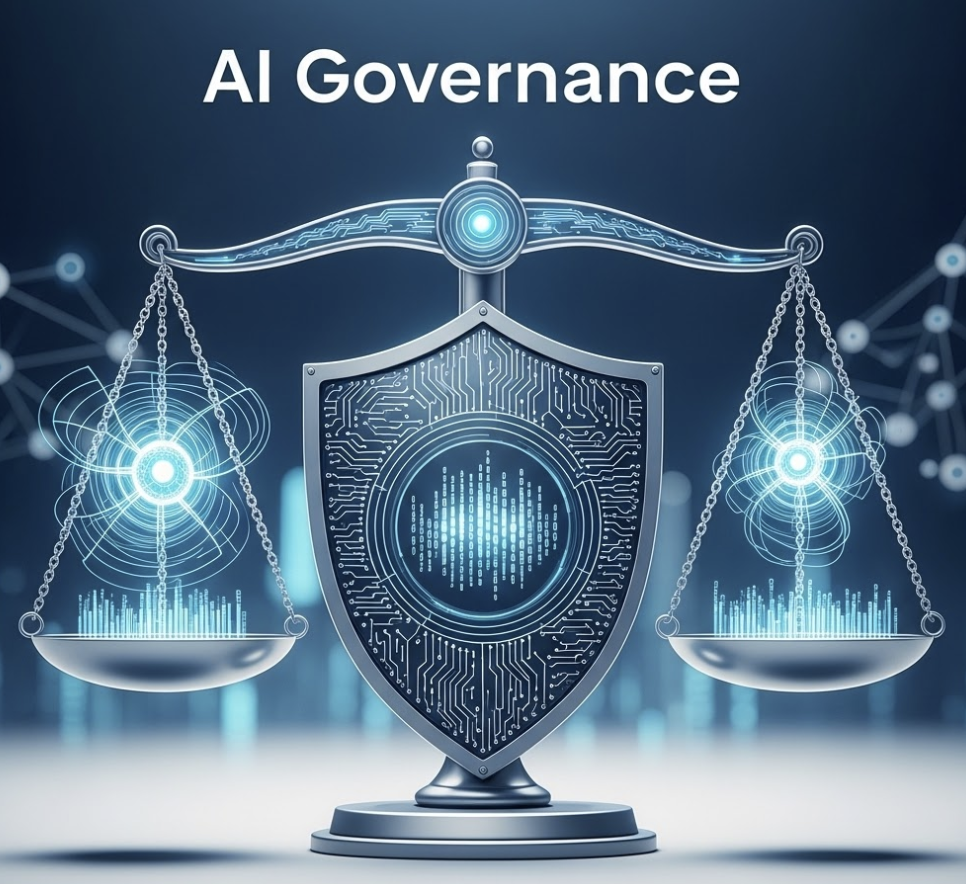
This is where "rigid" business rulescome in. A rigid rule is a non-negotiable constraint, an unbreakable limit that defines the agent's perimeter of action. These rules cannot be "flexed" or "cheerfully skipped" by the agent in the name of optimization or perceived efficiency. They are the pillar that transforms creative intelligence into responsible management.
There are contexts where tolerance for error or risk is minimal, and agency must be strictly conditioned.
Consider an autonomous agent charged with evaluating credit applications.The agent relies on an ML model that predicts risk, but its autonomy could lead it to relax parameters in search of "optimizing" customer acquisition.
If a rigid business rule states: "Any applicant with a risk scoring below X cannot receive a loan greater than Y," an overly autonomous agent might decide to ignore or freely interpret this rule. The consequence of this mismanagement of the business rule could be an accumulation of bad loans, leading the entity to significant losses.
In contrast, for low-risk tasks (such as recommending a movie or suggesting a transportation route), we can indeed allow greater agency and a higher fault tolerance to reward autonomy and creativity.
The AI Handicap: Trust and Traceability
One of the biggest obstacles to the massive and responsible adoption of AI systems—especially agentic ones based on fuzzy logic rather than deterministic logic—is their inherent limitation in:
- Traceability
- Consistency
- Auditability and Alerts
- Explainability
A pure deep learning model acts as a "black box" that outputs a decision, making it difficult to know why it was taken. What happens if the decision to deny a service is based on an unconscious bias in the model? Without rigid rules, tracking the source of the error is almost impossible.
The business rules are the most practical solution to this problem. If credit is denied, the traceability does not lie in the complexity of the model, but in the rule that was activated: "The credit was denied because the rigid rule 'Debt-to-Income Ratio above 40%' was activated." This rule acts as a mandatory logging mechanism and provides instant explainability that satisfies regulatory and auditing requirements.
The ROI Drain: "More Police Than Protected"
The path to total autonomy is full of obstacles. Agentic AI projects, in their initial implementation phases, require high human supervision. To mitigate the risk of the agent making catastrophic decisions, organizations often implement extensive manual review processes.
This results in a situation where, paradoxically, there are "more police than elements we want to protect."The need for constant human intervention and multiple checkpoints nullifies the agent's promise of efficiency, which in turn significantly drains the Return on Investment (ROI) of the AI implementation. Autonomy becomes expensive "assisted automation."
Winning Strategy: Orchestration and Gradual Transition
The most effective strategy is controlled symbiosis. Organizations should not seek total autonomy overnight. The logical path is to make the leap from mono-task AI agents to multi-task and more sophisticated Agentic AI, but through the orchestration of agents and "rigid" business rules, eventually making the leap to authentic autonomous systems later on.
Therefore, at dataguru, we propose a "phased" implementation in which we gradually raise the level of "agency":
- Phase 1 (Rigid Orchestration): Implement agents that execute complex tasks, but always under the strict surveillance of rigid rules. Critical decisions are validated by the rule framework itself. This phase allows for building the Agentic AI methodology, ensuring traceability, trust, and a robust audit framework.
- Phase 2 (Flexible Agency): Once the methodology is controlled, the models have matured, and trust in the system is high, one can make the leap to flexible business rules. Here, Agentic AI is granted more agency to make autonomous decisions, with rigid rules reserved solely for the most extreme risk boundaries.
From dataguru , we believe that in the agentic era, the winner will be the agent that operates with the combination of ML precision, the application of rigid rules where necessary, and leveraging the creative capacity of LLMs for advancement with confidence and responsibility.